Showing posts with label museum. Show all posts

Tuesday, December 05, 2006

Wallace Collection in London

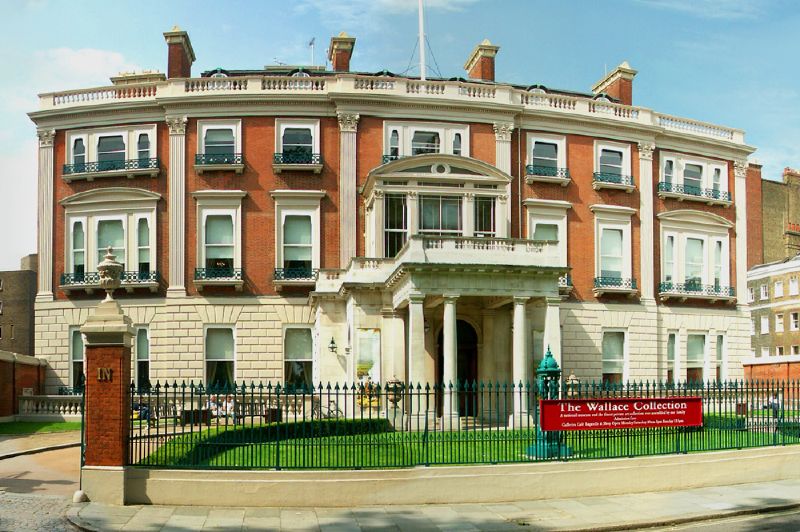
Wallace Collection in Manchester Square

This photo of the view of The Wallace Collection in London is part of one of the panoramic images found on the PanoramicEarth.com Tour of London. There are over 100 images taken from around London linked to an interactive map.

Plan your visit to London by taking advantage of these London Hotel Specials or Thomson City Breaks. Get the most of London with these London Guide Books

The Wallace Collection started life as a private collection built up during the 18th and 19th centuries by the Marquesses of Hertford. The final collector was Sir Richard Wallace, the son of the 4th Marquess. Upon his death his widow, Lady Wallace, donated the entire collection to the nation in 1897. Hertford House, the former London residence of the Wallaces, was converted into a museum and the collection was opened to the public in 1900.

Among the more famous pieces is The Laughing Cavalier by Hals, and works by Titian and Rembrandt. The Wallace Collection also contains a large number of 18th Century French wokrs including paintings, porcelain, furniture and gold boxes. Together this is reputed to be one of the largest collections of French works outside of France. However, the Wallaces did not stop there and you will also find British arms and armour as well as other European and Oriental objects.

Thankfully, entrance to the Wallace Collection is still free, and the central courtyard to the house was given a glass roof a few years ago so visitors will not be caught out in the weather. Unfortunately, the same can not be said for Manchester Square, on which the Wallace Collection is located just off Oxford Street, which is kept under lock and key for the use of the surrounding residences only.

Over 200 Destinations with HotelConnect.

The nearest Tube stations the Wallace Collection are Bond Street and Marble Arch on Oxford Street, though Baker Street is not too far away.

The full panoramic image showing the front of Hertford House and Manchester Square can be found on the London tour by PanoramicEarth.com. An enlargement of this photo can be found on Flickr. You can also find a marker for the Wallace Collection on Tagzania.

For more articles on London see the London Index or select one of the labels at the bottom.

Monday, November 27, 2006

Tower of London and Crown Jewels

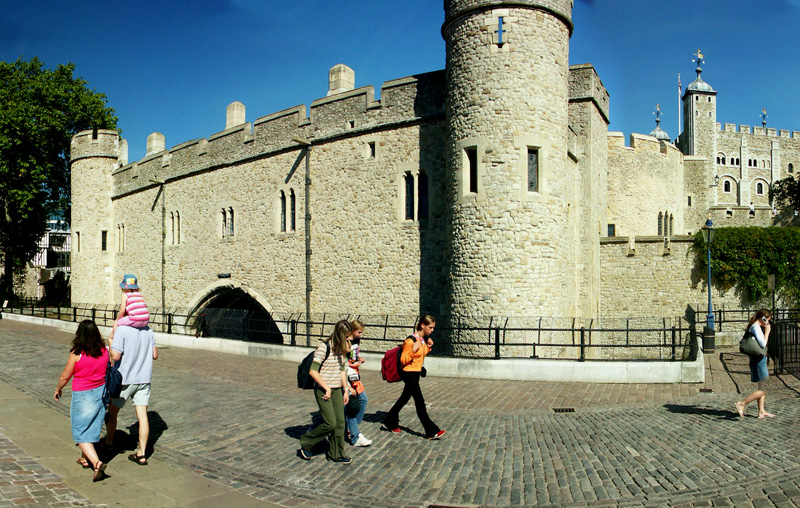
Tower of London from near to Tower Bridge

This photo of The Tower of London is part of one of the panoramic images found on the PanoramicEarth.com Tour of London. There are over 100 images taken from around London linked to an interactive map.

London for Less - FREE Theatre, Dining, or Sightseeing. Get the most of London with these London Guide Books

The Tower of London is another of those London buildings that is a world famous London icon. Built on the north bank of the Thames, opposite to the GLA Headquarters and near to Tower Bridge, the Tower of London evokes visions of imprisonment and torture through the ages of British Monarchy, being a place of execution of not a few kings and queens, along with other notable traitors or prisoners. Entrance to the Tower of London and the surrounding attractions of Tower Bridge Exhibition and the HMS Belfast is free with the London Pass.

Today the Tower of London is mostly known for two things – beheadings and the Crown Jewels. It was here that Anne Boleyn was beheaded by Henry VIII in 1536, supposedly for treason, though most likely for not bearing him a son. Most executions actually occurred on Tower Hill (now the site of a tube station), and only 7 individuals, including Anne Boleyn and Lady Jane Grey, were beheaded on the Tower Green, inside the walls of the Tower of London. The tower has also been a place of plotting and murder, most notably of the 2 sons of Edward IV by Richard, who became Richard III, as written about by Shakespeare. The bones of the 2 boys were discovered many years later under the foot of a stairway.

The Tower of London has long been home to the Crown Jewels. These used to be stored in the White Tower, and were almost successfully stolen by Thomas Blood and his gang in 1671. They were foiled by the unexpected appearance of the son of the guard and the Crown Jewels were saved. For his crimes, bizarrely, Thomas Blood was awarded a £500 per year pension and access to the Royal Court. The Jewels were then moved to a purpose built storeroom, where they remained until the Great Fire in the Tower in 1841. They are now on display in a safely guarded vault.

The central part to the Tower of London is the White Tower (originally called the Great Tower) built by William the Conqueror in 1078. The Tower, constructed of imported French stone, was built to protect both London from outside invasion, and to protect the occupying Normans from London. In the 12C King Richard the Lionheart dug a moat around the Tower and also erected a surrounding wall. This moat was improved in the 13C by Henry III and remained in use until it was drained in 1830. This also finished the effective use of the Tower of London as a fortress.

The Tower of London was converted by Henry III into a royal palace adding a number of outbuildings. Although the Royal Family have not lived here since the times of Oliver Cromwell, the Tower is still guarded as a royal Palace. The Tower has in the past also served time as a zoo, with animals on site from the 13th to the 19th Centuries. The Lion Gate is almost all that remains of this use, which used to be part of the Lion Tower, and the animals moved to the new London Zoo in The Regents Park.

The Tower of London actually contains some 20 distinct towers aside from the central White Tower. These include Beauchamp Tower, Bell Tower, Bloody Tower (or the Garden Tower), Bowyer Tower, Brick Tower, Broad Arrow Tower, Byward Tower, Constable Tower, Cradle Tower, Develin Tower, Deveraux Tower, Flint Tower, Lanthorn Tower, Martin Tower, Middle Tower, St. Thomas's Tower, Salt Tower, Wakefield Tower, Wardrobe Tower and the Well Tower.

Most tourists do not venture much further east than this in London unless they are visiting Greenwich. The nearest tube station to the Tower of London is Tower Hill, which is also an entrance point to the Docklands Light Railway.

Over 200 Destinations with HotelConnect

The full panoramic image taken of the Tower of London can be found on the London tour by PanoramicEarth.com. An enlargement of this photo can be found on Flickr.

For more articles on London see the London Index or select one of the labels at the bottom.
Monday, November 13, 2006

South Kensington Tube Station - London

South Kensington Tube Station

This photo of South Kensington Tube Station in London is part of one of the panoramic images found on the PanoramicEarth.com Tour of London. There are over 100 images taken from around London linked to an interactive map.

Plan your visit to London by taking advantage of these London Hotel Specials or Thomson City Breaks. Get the most of London with these London Guide Books

South Kensington is now a very fashionable area of London in which to both live and shop. As is the nature of such things, South Kensington is also a very expensive area for both activities. The area is also well know for the museums and galleries nearby, for South Kensington is the stop you need if you plan on visiting the Natural History Musuem, Earth Galleries, Science Museum of the Victoria and Albert (V&A) Museum. Entrance to all of these museums is free, though you may have to pay for special exhibitions.

Because of it’s proximity to the museums, South Kensington Tube station is often very busy. Thankfully, given that the area is also surrounded with very busy roads, a tunnel links the tube station to each of the museums, including, since 2005, the V&A. You will often find buskers playing music in the tunnel and selling their cd’s.

If you exit South Kensington tube at street level, you will immediately be confronted with several busy roads all lined with boutiques, restaurants and other shops. The station was opened in 1868 and little has changed since, except that now it is estimated that over 2 million people a month pass through it. Originally the station accessed the District Line, but then access to both the Piccadilly and Circle lines were added.

The area of South Kensington (part of the Royal Borough of Kensington and Chelsea) was fairly undeveloped until the Great Exhibition of 1851 when large areas of land were purchased for the institutions dedicated to the arts and science. These gradually became the museums and Imperial University all located in the surrounding area.

South Kensington Tube is also the closest tube to the Royal Albert Hall, Albert Memorial, Diana Memorial Fountain and the Serpentine Gallery. Other nearby tube stations include Knightsbridge, next to Harrods.

Over 200 Destinations with HotelConnect.

The full panoramic image taken of South Kensington Tube Station can be found on the London tour by PanoramicEarth.com. An enlargement of this photo can be found on Flickr.

For more articles on London see the London Index or select one of the labels at the bottom.

Tuesday, November 07, 2006

Imperial War Museum - London

Imperial War Museum in London

This photo of The Imperial War Museum in London is part of one of the panoramic images found on the PanoramicEarth.com Tour of London. There are over 100 images taken from around London linked to an interactive map.

Plan your visit to London by taking advantage of these London Hotel Specials or Thomson City Breaks. Get the most of London with these London Guide Books

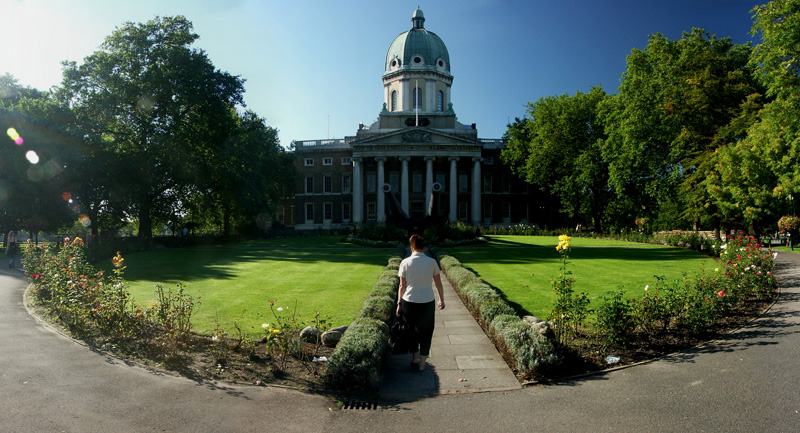
The Imperial War Museum in London is found in Lambeth, and covers the war throughout the 20C, especially the conflicts that have involved Britain and the Commonwealth. Entrance to the Imperial War Museum is free, but there may be charges for special exhibitions.

In front of the Imperial War Museum are two massive guns from the HMS Ramillies (left) and the HMS Resolution (right – this gun was later mounted on the HMS Roberts and used during D-Day). Left of the guns stands a segment of the Berlin Wall emblazoned with a screaming mouth and the words ‘Change your Life’.

The first gallery of the Imperial War Museum is the Large Exhibits Gallery, which contains a variety of tanks, planes and rockets. Among the exhibits here are a V2 rocket ‘terror’ weapon used by the Nazis against London in WWII, along with a Focke Wulf 190 and a Heinkel 162. You will also find a Polaris missile and a casing of a ‘Little Boy’ atomic bomb similar to the one dropped on Hiroshima at the end of WWII. You can roam among and under these machines of war before moving on to other exhibitions.

Thereafter there are a number of other galleries, with those covering the First and Second World Wars (WWI and WWII) being the largest. The Holocaust Exhibition in the Imperial War Museum is also a permanent display about the horrors and methods employed by the Nazis in their concentration camps (a concept first used by the British during the Second Boer War and South African War in 1899).

The Imperial War Museum Collection (some of which are available online) contain a massive amount of material about war, including 19,000 works of art, 120 million feet of cine film, 6 million photographs and negatives and 36,000 hours of sound recordings. Together this forms one of the most comprehensive collections of material dealing with all aspects of war in the world.

The Imperial War Museum has several other branches in Britain. Of these 3 more are in London, the Churchill Museum and Cabinet War Rooms are both found in Westminster near to Downing Street, while the cruiser HMS Belfast is a floating museum on the Thames near to Tower Bridge and opposite the Tower of London (Free entrance to all with the London Pass).

The nearest tube stations to the Imperial War Museum are Elephant and Castle and Lambeth North.

Over 200 Destinations with HotelConnect

The full panoramic image taken of the front of the Imperial War Museum can be found on the London tour by PanoramicEarth.com. An enlargement of this photo can be found on Flickr.

For more articles on London see the London Index or select one of the labels at the bottom.

Monday, November 06, 2006

HMS Belfast - London

HMS Belfast

This photo of the HMS Belfast in London is part of one of the panoramic images found on the PanoramicEarth.com Tour of London. There are over 100 images taken from around London linked to an interactive map.

Plan your visit to London by taking advantage of these London Hotel Specials or Thomson City Breaks. Get the most of London with these London Guide Books

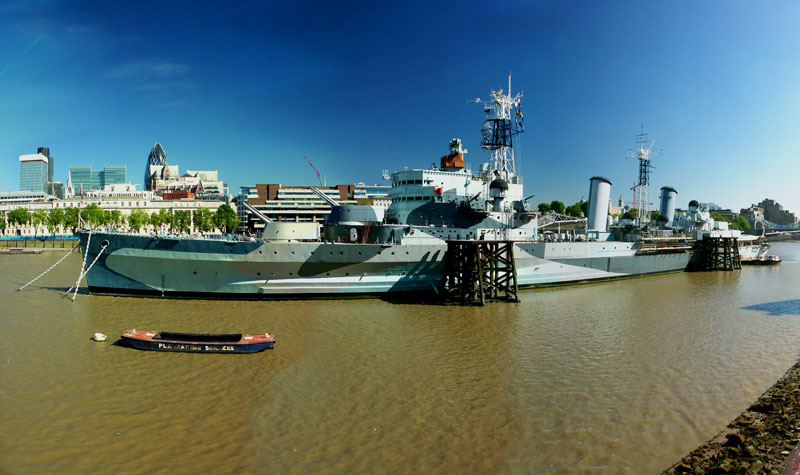
The HMS Belfast is the last big gun battleship from WWII and is moored as a permanent floating exhibit on the River Thames between London Bridge and Tower Bridge. It is possible to visit the HMS Belfast, you are recommended to give yourself about 2 hours to do so, and entrance to the HMS Belfast is free to holders of the London Pass. After visiting the HMS Belfast there are plenty of other things in the area to see and do, as described at the bottom of this article. The HMS Belfast is one of the branches of the nearby Imperial War Museum.

The HMS Belfast is a Town Class cruiser built for the British Navy in 1938. It saw extensive service during WWII, was damaged by a magnetic mine in 1939 leaving the Frith of Forth, and returned to service in 1942 having been repaired and refitted. At that time the HMS Belfast was then the heaviest cruiser in the British fleet with a displacement of 11,553 tons. The HMS Belfast provided cover for convoys in the North Atlantic and was involved in the Battle of the North Cape, along with her sister ship the HMS Duke of Yourk against the German Gneisenau class battlecruiser Scharnhorst. 1944 saw the HMS Belfast involved in action against the Tirpitz, the last surviving German heavy warship, and then later in support of the D-Day Landings in France.

Following further service in Europe, the HMS Belfast then entered the Asian arena, and was intended to support the eviction of the Japanese from Malaya, but this turned into a relief operation as the Japanese surrendered before her arrival. It is reported that a U-boat commander came upon the HMS Belfast unnoticed towards the end of the war but decided not to sink her. After the WWII she saw active service in the Korean War, and finally returned to the UK in 1963. Former HMS Belfast Captain Rear Admiral Sir Morgan Morgan-Giles successfully petitioned for her to become a museum ship, and she was opened to the public on Trafalgar Day in 1971.

As well as the guided tour and museum exhibition, the HMS Belfast is also the location of a number of one-off special events and activities. Other attractions near to HMS Belfast includeThe Monument, Winston Churchill’s Britain at War, Vinopolis, Southwark Cathedral, Tower of London and Tower Bridge. Entrance to all of these London attractions is free to holders of the London Pass. Other nearby attractions include The London Dungeon, City Hall, Hay’s Galleria (for shopping) and the Design Museum. The nearest tube station is London Bridge, but Tower Hill is not too far away.

Over 200 Destinations with HotelConnect

The full panoramic image taken of the HMS Belfast can be found on the London tour by PanoramicEarth.com. An enlargement of this photo can be found on Flickr.

For more articles on London see the London Index or select one of the labels at the bottom.
Friday, November 03, 2006

Tower Bridge - London

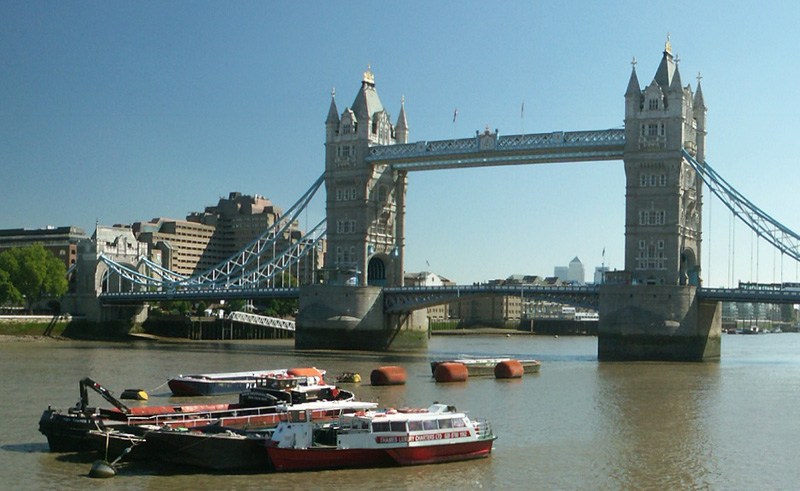
Tower Bridge, view of Tower Bridge taken from City Hall at low tide.

This photo of Tower Bridge in London is part of one of the panoramic images found on the PanoramicEarth.com Tour of London. There are over 100 images taken from around London linked to an interactive map.

Plan your visit to London by taking advantage of these London Hotel Specials or Thomson City Breaks. Get the most of London with these London Guide Books

Tower Bridge is one of the most famous, and most photographed landmarks in London. Just pick up almost any book or brochure and there it is. Tower Bridge is truly iconic as it crosses the Thames next to the Tower of London. As well as being a functioning bridge, Tower Bridge also contains an exhibition about the history of the bridge, and allows you access to the high walkway that spans the two towers, giving a remarkable view of London from the top of Tower Bridge. Access to this attraction is free with the London Pass.

Tower Bridge is often confused with London Bridge, the next bridge up the Thames from Tower Bridge on the way to Westminster. Yet both the construction and function of Tower Bridge are unique for the bridges in London, with two Gothic towers and a raisable span.

But why a raisable platform? Well, in the late 1800’s London still had a functioning port at the Pool of London, which is located between London Bridge and Tower Bridge. However, the demands of commerce and traffic necessitated another bridge across the Thames. After 50 proposed designs and 8 years of planning Joseph Bazalgette's design for a bascule bridge was accepted in 1874. The central 61m (200 foot) span between the two towers was split into two bascules which can be raised to 83° to allow river traffic to pass.

Tower Bridge was steam powered, using steam engines to pump water into the accumulators and the hydraulic raising mechanism. All the machinery for this was housed in the two towers of the bridge. Being built in the Victorian era, naturally elegance and style was demanded to cover the machinery and thus we have the icon of Tower Bridge given to London. In fact the original design gave a medieval form, but was replaced with the current Victorian Gothic form.

When you stand at the centre point of Tower Bridge, where the two bascules meet, give thought to the following: It took 432 workers over 8 years to build the bridge. In so doing they used some 70,000 tons of concrete for the river bed supports, and 11,000 tones of steel in the two towers and the walkways situated near the tops of them. All this infrastructure was then clad in a mixture of Cornish granite and Portland Stone to provide the spectacle we have today. Each bascule weighed over 1000 tons, was counterbalanced within the towers and could be raised to the full height within a minute.

Other attractions near to Tower Bridge HMS Belfast, include The Monument, Winston Churchill’s Britain at War, Vinopolis, Southwark Cathedral and Tower of London. Entrance to all of these London attractions is free to holders of the London Pass. Other nearby attractions include The London Dungeon, City Hall, Hay’s Galleria (for shopping) and the Design Museum. The nearest tube station to Tower Bridge is Tower Hill, next to the Tower of London.

Over 200 Destinations with HotelConnect

The full panoramic image taken from Tower Bridge can be found on the London tour by PanoramicEarth.com. An enlargement of this photo can be found on Flickr.

For more articles on London see the London Index or select one of the labels at the bottom.
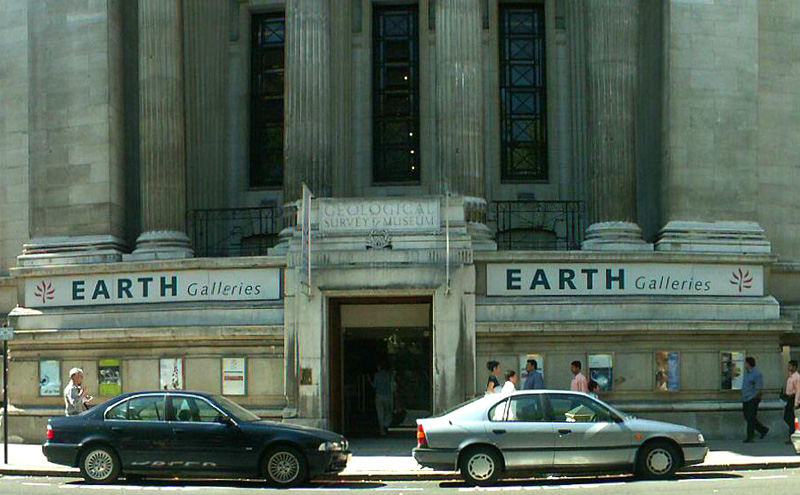
Earth Galleries - Natural History Museum, London

Earth Galleries, part of the Natural History Museum, entrance on Exibition Road.

This photo of The Earth Galleries in London is part of one of the panoramic images found on the PanoramicEarth.com Tour of London. There are over 100 images taken from around London linked to an interactive map.

Plan your visit to London by taking advantage of these London Hotel Specials or Thomson City Breaks. Get the most of London with these London Guide Books

The Earth Galleries used to be a separate museum, the Geological Museum. Though the name has changed, the focus of the Earth Galleries has remained the same – the physical Earth. The Earth Galleries have been incorporated into the Natural History Museum, and while there is an entrance at front of the Earth Galleries leading onto Exhibition Road, it is possible to access the Earth Galleries without leaving the Natural History Museum.

Either way, you are in for a treat. Follow down the labyrinths of the Natural History Museum, past fossils of aquatic dinosaurs, you enter a room filled with monolithic polished slabs of swirling granites, marbles and other things from the earth. Pause and absorb some of the shapes and colours that rival the best of artists (and win) before moving on.

Entrance to Earth GalleriesYou will then enter a large dark hall lined with cases containing samples of rocks and materials both beautiful and rare, as well as other minerals in their raw form. The hall seems to go on forever, with 4m high statues on lit pedestals at the far end. As you walk along you will become aware that an escalator ascends from the hall as if to Mount Olympus. In fact, the escalator passes through an enormous model of the earth’s crust to the upper floors. From this hall it is also possible to access Exhibition Road. If you have come to the Earth Galleries via the Natural History Museum, then do make the time to go to the top of the steps leading to Exhibition Road and look back.

Then ascend the escalator and the very centre of the earth itself. You are about to begin your earth exploration, finding out about volcanoes, have the chance to stand on a platform and experience part of an earthquake, see how the very solid ground we stand on floats like a fragile sheet on a very hot and turbulent masses of magma. (You may have guessed by now that I really like this museum.). Learn about plate tectonics, a relatively new science, and see why the earth sometimes shakes, rattles and rolls.

The nearest tube is South Kensington. The Earth Galleries street entrance is just before the Science Museum, and a side entrance to the Victoria and Albert Museum is over the road.

Over 200 Destinations with HotelConnect

The full panoramic image taken of the Earth Galleries from Exhibition Road can be found on the London tour by PanoramicEarth.com. An enlargement of this photo can be found on Flickr.

For more articles on London see the London Index or select one of the labels at the bottom.
Wednesday, November 01, 2006

Royal Courts of Justice (Law Courts) - London

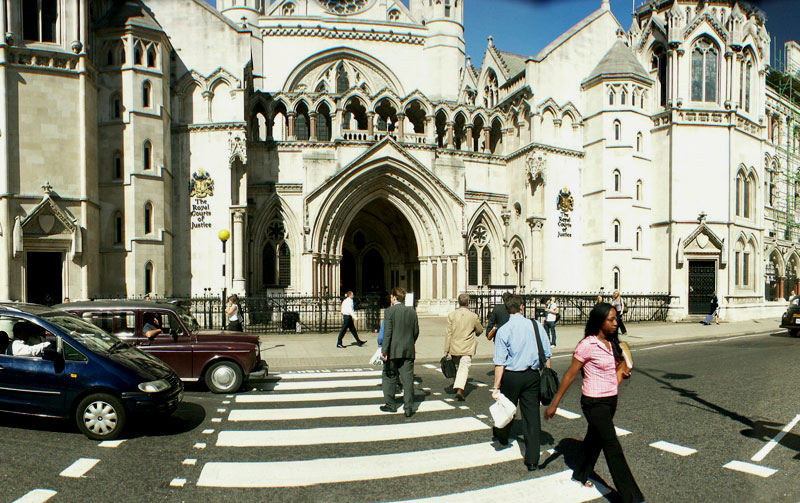
Royal Courts Of Justice (also called The Law Courts) in London

This photo of the Royal Courts of Justice in London is part of one of the panoramic images found on the PanoramicEarth.com Tour of London. There are over 100 images taken from around London linked to an interactive map.

Plan your visit to London by taking advantage of these London Hotel Specials or Thomson City Breaks.

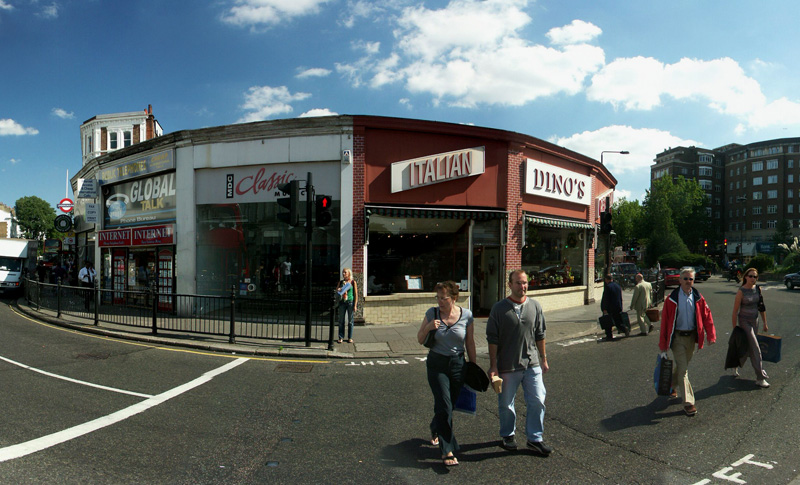
The Royal Courts of Justice stand on the Strand, just to the east of Aldwych. The strand is horribly busy most of the time, and getting a clear shot of the front of the building involves waiting for traffic to be stopped by people crossing the road. And stop they do, for surely running someone over on the pedestrian crossing outside the Royal Courts of Justice would have to be problematic in the extreme.

The Royal Courts of Justice are more commonly known as the Law Courts, and handle civil trials in the country. There are some 88 court rooms contained within the huge Gothic building, all of which the public are allowed to enter as long as the courts are in open session and neither the judge is giving out sentence, nor witnesses being sworn in. A list stating the progress of each case is found in the central hall.

The Royal Courts of Justice also contain a small collection of legal attire, which the visitor may view, and a guided tour of the building runs twice a month. This is an excellent way to find out more about the building. For those interested there is also a Guide to the Royal Courts of Justice available.

The Royal Courts of Justice were designed by George Edmund Street and opened by Queen Victoria in 1882, it is the last major Gothic revival building to be erected in London, using of some 35 million bricks faced with Portland stone, containing 1,000 rooms and 3.5 miles of corridors. Previously to this the site contained 450 houses which were demolished to provide the land required.

When you enter the Law Courts from the Strand you will pass under two elaborately carved porches which are fitted with iron gates. The carvings on the outer porch show the heads of the most eminent lawyers of the time, with the Saviour represented at the highest point. Over the Judges (north) entrance are carvings of both cats and dogs, representative of the legal forces and litigants fighting it out in court (but in a genteel clashing of words, of course).

The whole area is, naturally, peppered with the most famous, and therefore often the most expensive, of solicitor firms in the UK. Near to the Royal Courts of Justice you will find the esteemed institutions of The Temple, and Lincolns Inn. The nearest tube stations are Waterloo, just across the Thames at Waterloo Station, and Charring Cross, at the Western end of the Strand.

Over 200 Destinations with HotelConnect

The full panoramic image of The Royla Courts of Justice can be found on the London tour by PanoramicEarth.com. An enlargement of this photo can be found on Flickr.

For more articles on London see the London Index or select one of the labels at the bottom.
Tuesday, October 24, 2006

Victoria and Albert (V&A) Museum - London

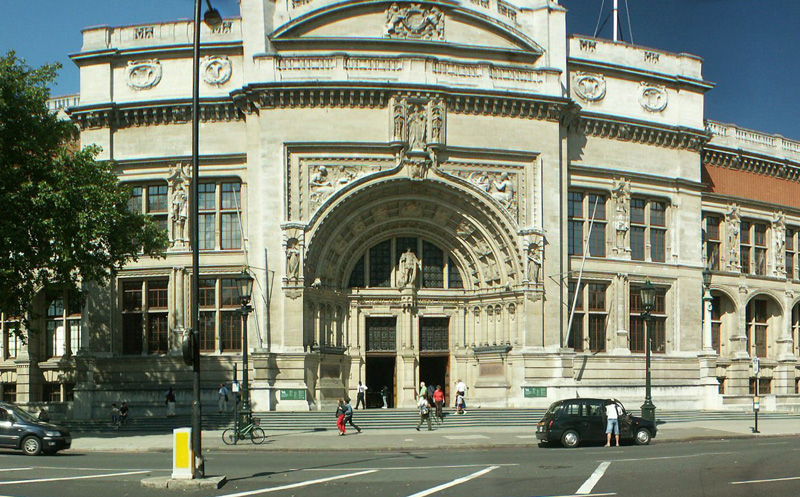
Victoria and Albert Museum (V&A Museum) in London

This photo of the Victoria and Albert (V&A) Museum in London is part of one of the panoramic images found on the PanoramicEarth.com Tour of London. There are over 100 images taken from around London linked to an interactive map.

Plan your visit to London by taking advantage of these London Hotel Specials or Thomson City Breaks.

The Victoria and Albert Museum (often called the V&A) was established in 1852 as the Museum of Manufacturers following the success of the Great Exhibition of 1851. The aim was to use the profits from the Great Exhibition to form a collection of items from around the world that would make art available to all and inspire British designers and manufacturers. In 1872 the collection was moved to the present site, then called the South Kensington Museum, and in 1899 it was renamed ‘Victoria and Albert’ Museum in honour of Queen Victoria and her consort Albert (Albert also has a hall and memorial just up the Exhibition Road in Hyde Park named after him) when the Queen laid the foundation stone of a new building to house the growing collection at the same site.

Thus the origins, what about the collection? The V&A collection now spans 2000 years of art from almost every culture and in almost every medium. Right from the outset the museum set out to acquire the very best of art available in every medium from glass work to metal work. As the market was far less competitive, it was able to fulfill these aims admirably to present the world with the outstanding collection we have today. There is also a particular emphasis on the development of British art throughout the centuries.

The V&A is on the corned of Cromwell Road and Exhibition Road and forms a cluster of museums along with the Natural History Museum (with the Earth Galleries) and the Science Museum. Once you have indulged the delights within the V&A’s 154 galleries, and explored the artifacts from Japan, India or the Orient, the local area around South Kensington and Knightsbridge offer many places to find refreshments.

The Victoria and Albert Museum is on the corner of Cromwell Gardens and Exhibition Road in South Kensington, west London. Entrance to the Museum itself is free.

Over 200 Destinations with HotelConnect

The image here shows part of the front of the V&A with the main entrance on Cromwell Road. Inside the entrance hall, at the focal point of the rotunda, is suspended a 9m high chandelier made of blown glass, typifying the museum’s raison d’ être. The full panoramic image can be found on the London tour by PanoramicEarth.com. An enlargement of this photo can be found on Flickr.

For more articles on London see the London Index or select one of the labels at the bottom.
Monday, October 23, 2006

British Library - London

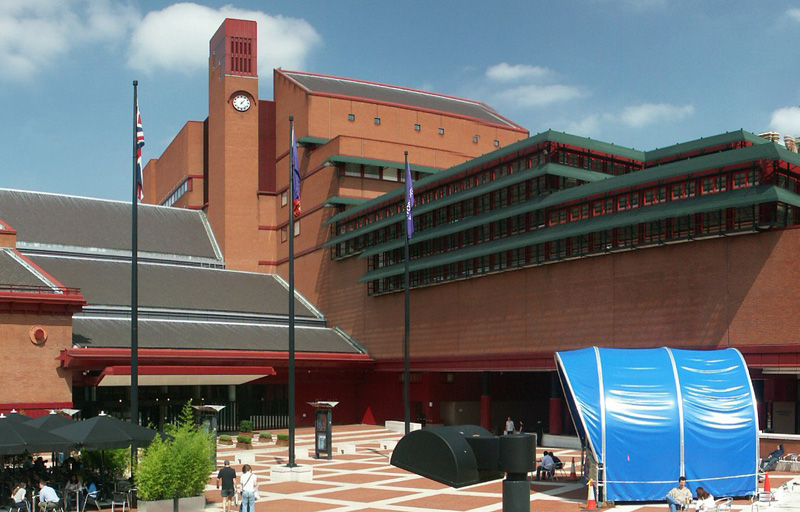
British Library in London

This photo of the British Library in London is part of one of the panoramic images found on the PanoramicEarth.com Tour of London. There are over 100 images taken from around London linked to an interactive map.

Plan your visit to London by taking advantage of these London Hotel Specials or Thomson City Breaks.

The British Library, home to the Lindisfarne Gospels, Two Gutenberg Bibles, Two 1215 copies of Magna Carta, the Egerton Gospel, the only surviving manuscript copy of the poem Beowulf and 347 leaves of the Codex Sinaiticus. And that is just the start, though some of the highlights, of one of the largest collections of manuscripts and other articles in the world.

The British Library is now housed in a purpose built building near to Kings Cross station. You pass through huge iron gates into a courtyard and then into the building itself. On your left will be a large crouching bronze called Newton, after William Blake. This can not be seen in this image, which shows the front of the British Library itself, a staggered and tiered red brick event which not many people have fallen in love with. However it is worth pressing onto the interior where there are often exhibitions and fantastic displays.

The British Library means different things to different people. It actually refers to a collection of books, which started off in 1753 as a department of the British Museum. Over the next 200 years or so the collection at the British Museum grew into one of the largest in the world. This was helped by the fact that it was entitled by law to obtain, for free, a copy of almost every item printed in the UK, be they books, periodicals, maps newspapers or sheet music. So vast was the ‘British Library’ collection that in Lenin declared it contained more Russian books than the libraries of Moscow or St. Petersburg. In 1983 the library expanded yet further with the addition of the National Sound Archive.

So how vast is it now? Well, 150 million items, including 25 million books, would keep most collectors happy. But this library continues to expand at a rate of some 3 million items annually. The collection includes manuscripts and documents that date back to 300 BC, thus the British Library has become not only a collection of books, but a vast museum as well.

The library inevitably outgrew it’s location in the British Museum and in the late 20C was moved to the current location in St. Pancreas, into a new building that cost some £496 million. The King's Library is also housed here in a 3 storey glass tower. This collection itself has some 65,000 books apart from other pamphlets, manuscripts and maps, all collected by King George III between 1763 and 1820.

Over 200 Destinations with HotelConnect

The image here shows part of the front of the British Library. The full panoramic image can be found on the London tour by PanoramicEarth.com. An enlargement of this photo can be found on Flickr.

For more articles on London see the London Index or select one of the labels at the bottom.

Friday, October 20, 2006

Science Museum London

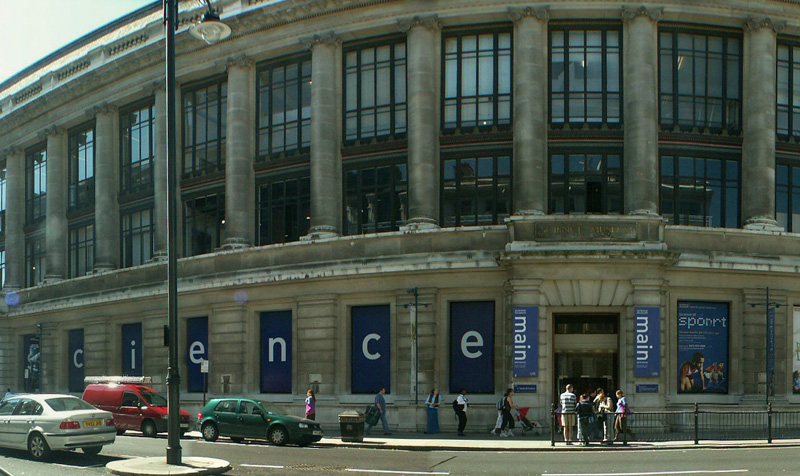
Science Meseum, South Kensington, London

This photo of the Science Museum in London is part of one of the panoramic images found on the PanoramicEarth.com Tour of London. There are over 100 images taken from around London linked to an interactive map.

Plan your visit to London by taking advatage of these London Hotel Specials or Thomson City Breaks.

From the outside the Science Museum in London does not look like very much. Certainly, compared to the Natural History Museum just around the corner, the Science Museum building seems quite plain. However, this belies the fantastic contents. Stepping through the doors you get the impression that you have entered some kind of Tardis, surely the inside is larger than the outside?

In fact, the inside of the Science Museum is vast. 6 floors crammed to the rafters with all sorts of activities and exhibits. Vast replicas of planes, rockets and engines. Functioning steam engines clunking away. Musical bridges and weird sculptures made of every day materials. Whether it is a history of glass, paper, plastics or pottery this has to be the place to come. Gallery after gallery unfolds as you explore the immense interior, with an Imax cinema at the back of the building. In fact there are over 40 galleries housing some 300,000 exhibits being put together since 1857. As the collection grew in size it was split between the Science Museum and the Victoria & Albert Museum just over the road. Famous exhibits include Stephenson's Rocket and Watson and Crick’s DNA molecule and even an Apollo 10 space rocket.

Down in the Launch Bay (adults to be accompanied by kids) is a great array of hands on puzzles and experiments. Fancy a 2m soap bubble – then this is the place to head for! For slightly younger children the Garden, also in the basement, provides another interactive play area. If that is not enough, then discover the secrets of patterns on the ground floor. Got to the end of the day and don’t want to go home? Why not arrange a sleepover in the Science Museum, an evening of fun and then the night in the museum itself.

My personal favorite exhibits have to include the musical bridge over the gallery on the ground floor and the space exhibits. I have yet to go to the Dana Centre and see what events and debates go on down there, or explore the whole of the Museum, but there is enough to keep coming back again and again, even without the special exhibitions.

The Science Museum is reputed to hold the largest and most significant collection about the development and use of science, technology, medicine and industry throughout history. With about 1.6 million visitors per year the Science Museum is one of the top ten tourist attractions in the UK. However, the collection is so vast that at any one time only about 15% of it is on display. It is located in Exhibition Road, South Kensington, the nearest tube is South Kensington.

Over 200 Destinations with HotelConnect

The image here shows part of the front of the Science Museum. The full panoramic image can be found on the London tour by PanoramicEarth.com. An enlargement of this photo can be found on Flickr.

For more articles on London see the London Index or select one of the labels at the bottom.
Natural History Museum - London

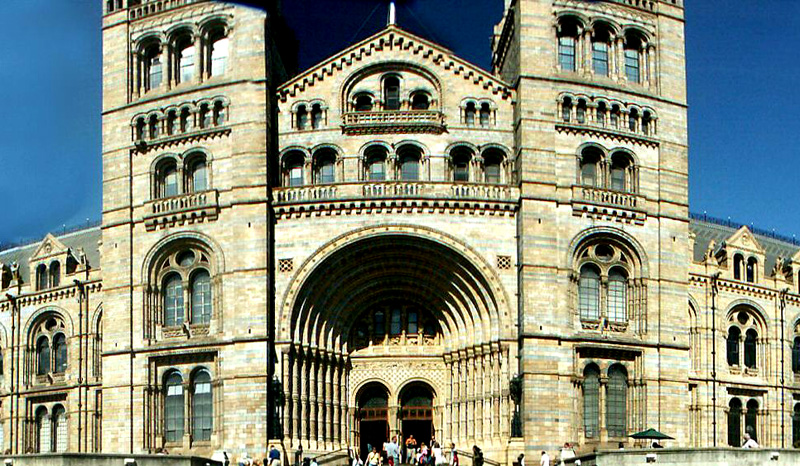
Natural History Museum in London

This photo of the Natural History Museum in London is part of one of the panoramic images found on the PanoramicEarth.com Tour of London. There are over 100 images taken from around London linked to an interactive map.

London for Less - FREE Theatre, Dining, or Sightseeing

The Natural History Museum in London is one of my favorite buildings. It is a fantastic example of Romanesque architecture, in patterns made of yellow and blue bricks. Almost every pillar around the front entrance is different. The collection within the Natural History Museum is as imposing as the building itself containing some 70 million items from the natural world. It began in the 17C as a bequest to the nation on the death of Sir Hans Sloane. The collection then contained some 70,000 items of various fields of study. It continued to grow and was later split, some is now housed by the British Museum, being of archeological nature.

As you enter through the arches of the front door you are met by the iconic cast of a Diplodocus skeleton filling much of the front hall. Nowadays if you wonder down the wrong gallery you are likely to find yourself face to face with active moving dinosaurs, brought to life through very clever animatronics.

Recently, in February 2006 the museum also came into possession of a giant squid, nearly 9m long. This is the only whole example of this deep sea animal in the world and now lies preserved in a tank in the Darwin Centre. You can book to go on a tour and see it, just visit any information desk on arrival at the Museum or call 020 7942 5011.

But if the giant squid is not to your fancy then there is plenty more in the Natural History Museum to keep any visitor of any age happy. Most of the museum is free, though there are special temporary exhibitions almost all the time bringing together new items. And if the is not enough here to satisfy your curiosity then you can always visit the Earth Science galleries and find out about the origins of the earth, watch a volcano erupt and stand in an earthquake. Just up the road is the Science Museum and nearby is the Victoria and Albert Museum.

Getting to the Nat Hist Museum (as it is often called) is very easy, the nearest tube is South Kensington, and a tunnel runs under all the busy roads to pop up just outside the museum itself. In recent years the courtyard in front of the Natural History Museum has been converted into an ice ring, which is proving very popular with both Londoners
and visitors alike.

Over 200 Destinations with HotelConnect

The image here shows part of the front of the Natural History Museum. The full panoramic image can be found on the London tour by PanoramicEarth.com. An enlargement of this photo can be found on Flickr.

For more articles on London see the London Index or select one of the labels at the bottom.

Monday, October 16, 2006

British Museum

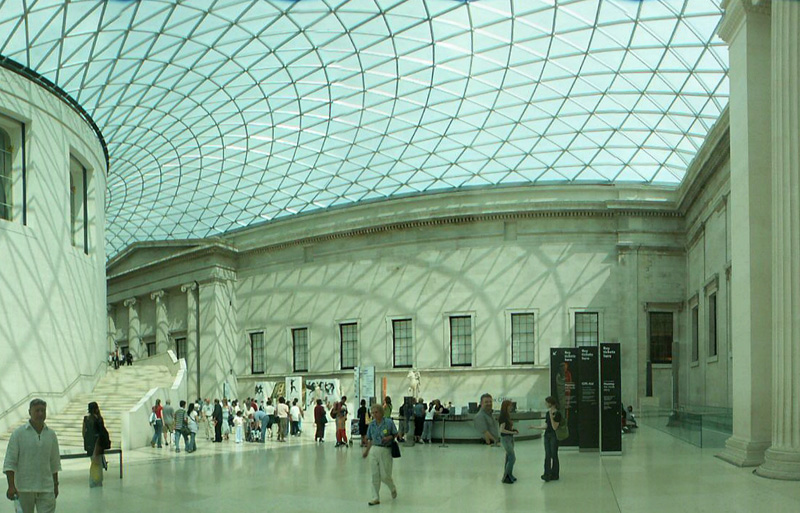
Great Court of the British Museum

This photo of the British Museum is part of one of the panoramic images found on the PanoramicEarth.com Tour of London. There are over 100 images taken from around London linked to an interactive map.

Plan your visit to London by taking advatage of these London Hotel Specials or Thomson City Breaks.

One of the few benefits to living in a large city is the potential for culture. European nations have had more time (and resources) than many to collect (or, as some would say, plunder) items from around the world for display and research. Prime among these collections in London has to be that of the British Museum. And I am quite fortunate as the British Museum is within walking distance of me. Access to the British Museum is free, however there are often special ticketed exhibitions (free with the London Pass) on at the British Museum as well.

The British Museum – home of the famous and contentious Elgin Marbles from Greece. These are not, as I used to think when growing up, a collection of glass spheres being played with by the gods of Greece, but friezes and colossal statues of marble from the quadriga of the Mausoleum at Halikarnassos. It is also home to the Benin Bronzes which are similarly in great demand.

Then there is the huge Egyptian and Persian collections on the first floor of the British Museum. Here too I came across the Rosetta Stone, one of the most important artifacts in the deciphering of ancient scripts from the middle east. A few years ago, amongst much rumbling, the British Museum opened the new Great Court, which is displayed here in the picture. This opened in 2000 and is made of 1,656 panes of glass, each with a unique shape. In the centre is the Reading Room.

If you want some stats, then I can tell you that the collection began in 1753, when a Sir Hans Sloane gifted his collection of some 70,000 items to the King. It was established by an act of Parliament and the collection contained here has been growing ever since. Later on when it grew too large the collection was split and all the biological items re-housed in the Natural History Museum.

Up until 1997 the British Museum also held the bulk of ancient manuscripts and objects of interest belonging to the British Library. These have since moved to the new British Library building located near Kings Cross. Included in this collection are Lindisfarne Gospels which date from 7C or so, and the Codex Sinaticus, a copy of the New Testament and parts of the Old Testament dating from around 300 AD.

The British Museum is near to Russell Square and Tottenham Court Road Tube stations.

Over 200 Destinations with HotelConnect

A full panoramic image of the outside of the British Museum is found on the London tour by PanoramicEarth.com. An enlargement of this photo can be found on Flickr.

For more articles on London see the London Index or select one of the labels at the bottom.

Wednesday, September 27, 2006

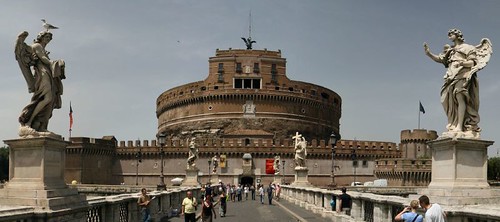
Castel Sant Angelo in Rome


The Castel Sant Angelo in Rome is one of the panoramic images found on the PanoramicEarth.com Tour of Rome. There are over 100 images taken from around Rome linked to an interactive map.

Full 360° panorama of the Castel Sant Angelo V

The Castel Sant Angelo V was originally built by the Roman Emperor Hadrian as a mausoleum for his family and known as Hadrian’s Mausoleum. It served time as a mausoleum, fort, prison, palace and now a museum. The name changed in the 6th Century when Pope Gregory the Great saw a vision of St. Michael on top of the building while praying for deliverance from a plague affecting Rome at the time. This is commemorated by a bronze statue on top the building overlooking Rome and sheathing a sword.

The first building was constructed between 135 and 139 AD. The ashes of Hadrian were buried here in 138 and succeeding emperors were buried here up to 217 AD, probably in the Treasury Room at the heart of the building.

In the 5th century the Mausoleum was converted into a fortress and incorporated into the defensive Walls built around Rome. The contents were looted by Visigoths in 410 during the sacking of Rome by Alaric.

Castel Sant Angelo and the Popes:
Pope Nicholas III connected the castle to the Vatican in the 14th century with a fortified, covered corridor called the Passetto di Borgo. During the sacking of Rome in 1527 Pope Clement VII took refuge here whilst back at the Vatican the Swiss Guard were slain to a man. Clement finally escaped dressed as a servant after several months watching Rome burn

The Castel Sant Angelo was then converted into both a papal residence, a prison and a place of torture. Paul III built a rich apartment, to make sure in a new siege the Pope had an appropriate place to stay. Leo X built a chapel decorated by Raffaello di Montelupo. Famous prisoners included Giordano Bruno, Cellini and Beatrice Cenci. Executions occurred in the small square interior of the building and skeletons excavated from the site show evidence of torture. In 1901 the building began a 30 year restoration programme and conversion to a museum.

More panoramas from Rome can be found on Panoramic Earth. For more articles on Rome see the Rome Index or select one of the labels at the bottom.

New Panoramas on Panoramic Earth