Showing posts with label westminster. Show all posts

Wednesday, December 11, 2013

St Martin in the Fields Church Virtual Tour


St Martin in the Fields 360 Panorama Image

St Martin in the Fields is a famous church in London, found on the north east corner of Trafalgar Square. The current church was designed by James Gibbs in the early 18th century. At the time it was built, the church stood in a field part way between the City of Westminster and the City of London. In 2006 a Roman grave was found on the site, indicating that the site had been used as a religious place of worship for hundreds of years.

This interactive, 360 panorama shows the interior of the church. It was taken by Peter Watts in September 2013.


Today, St Martin in the Fields is a popular concert venue, with classical concerts and organ recitals often being held in the church itself. Beneath the church, in the Crypt Cafe, jazz concerts are often held. Being right next to Trafalgar Square, the church is also a popular tourist attraction. It is also the parish church of Buckingham Palace, Number 10 (Downing Street) and the Admiralty.

Tuesday, December 05, 2006

Lambeth Bridge - London

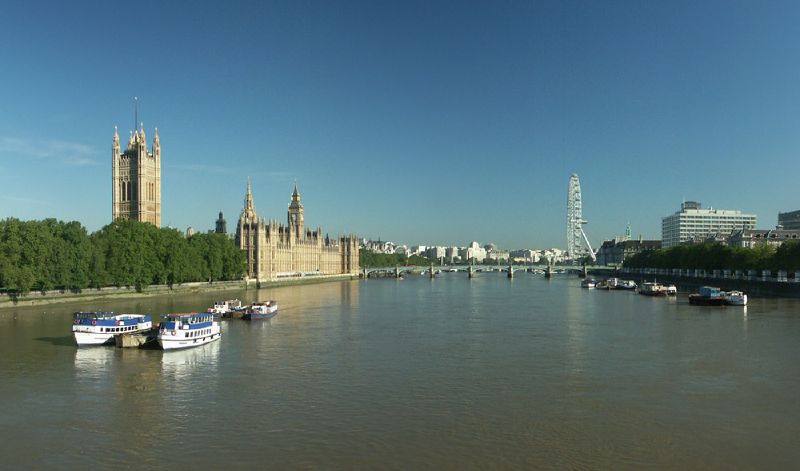
View of Palace of Westminster and London Eye from Lambeth Bridge

This photo of the view of Lambeth Bridge in London is part of one of the panoramic images found on the PanoramicEarth.com Tour of London. There are over 100 images taken from around London linked to an interactive map.

Plan your visit to London by taking advantage of these London Hotel Specials or Thomson City Breaks. Get the most of London with these London Guide Books

There has been a Thames crossing at the current site of Lambeth Bridge for centuries, though the first bridge crossing here was built in 1862. The original Lambeth Bridge was a toll suspension bridge, but the approaches were too steep for most coaches to use. The current bridge was built in 1932 by King George V. At either end are Obelisks topped with pine cones – the traditional symbol of hospitality since Roman times.

Lambeth Bridge links Westminster with Lambeth and offers great views back up the Thames towards Westminster Bridge. Just on the south side of Lambeth Bridge is the Museum of Garden History and Lambeth Palace, the London residence of the Archbishop of Canterbury. There is a peasant walk along the Thames opposite the Houses of Parliament from Lambeth Bridge to Westminster Bridge.

On the north side, Lambeth Bridge joins up to Horseferry Road and Millbank. Here also is the southern end of Victoria Tower Gardens, which link the bridge with the Palace of Westminster. These gardens contain a number of statues, including a suffragette and a cast of Rodin's Burghers of Calais.

As can be seen from this photo, looking down the river towards Westminster from Lambeth Bridge you get a great view of the Palace of Westminster, partially shielded by the trees of the Victoria Tower Gardens. The rest of London appears on the skyline above Westminster Bridge, while on the left the London Eye towers over the surrounding buildings.

Up until 1750 the Thames crossing here used to be by ferry, which had the unfortunate reputation for sinking. In 1633 it did so with the belongings of Archbishop Laud, and then in 1656 carrying Oliver Cromwell’s coach. Early attempts to secure permission for a bridge received successful opposition from the Company of Watermen. However, the opening of Westminster Bridge in 1750 killed off the ferry trade. Another 100 years passed before the first Lambeth Bridge was built.

Over 200 Destinations with HotelConnect.

The nearest Tube stations to Lambeth Bridge include Lambeth North and Westminster.

The full panoramic image taken Lambeth Bridge can be found on the London tour by PanoramicEarth.com. An enlargement of this photo can be found on Flickr. You can also find a marker for Lambeth Bridge on Tagzania.

For more articles on London see the London Index or select one of the labels at the bottom.

Monday, November 27, 2006

Westminster Abbey - London

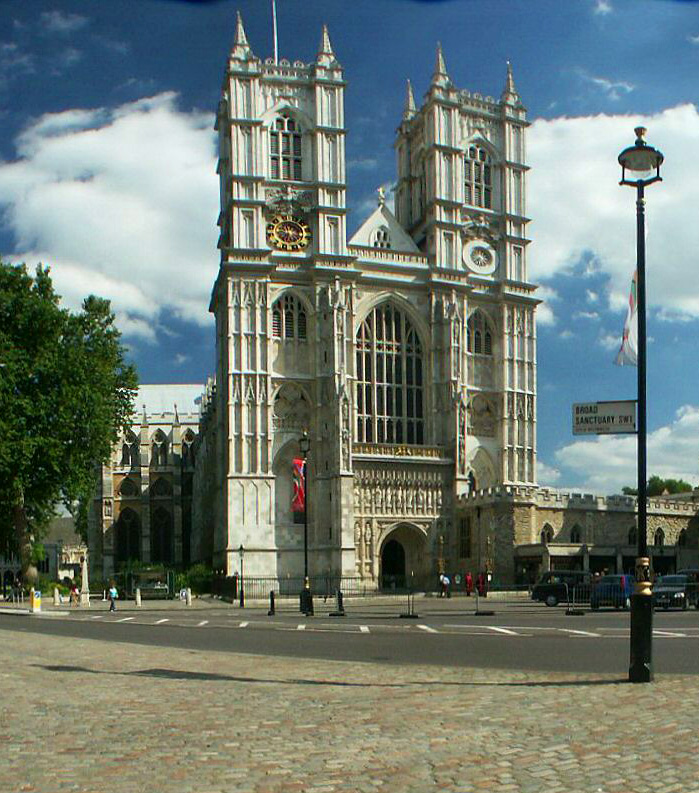
Front of Westminster Abbey in London

This photo of Westminster Abbey in London is part of one of the panoramic images found on the PanoramicEarth.com Tour of London. There are over 100 images taken from around London linked to an interactive map.

Plan your visit to London by taking advantage of these London Hotel Specials or Thomson City Breaks. Get the most of London with these London Guide Books

Westminster Abbey is another very popular attraction in London. The Abbey is very close to the Houses of Parliament (Palace of Westminster), Big Ben and Westminster Cathedral (a Catholic Cathedral) and Westminster Central Hall (Methodist place of worship). Westminster Abbey is both a huge construction with a similarly long history. Unfortunately for those visiting, photography and filming is not allowed within the Abbey or the adjoining St. Margaret’s Church. Equally, Westminster Abbey does not participate in London Pass offers.

The whole area owes it’s name to the Abbey, as it was called the West Minster to distinguish it from St Paul’s (East Minster) in the City of London. This name then became associated with the area around the Abbey, which is now known as Westminster.

The history of Westminster Abbey may date back to 616 when a shrine is supposed to have been built on what was then known as Thorn Island. By the mid 900s a community of Benedictine monks was established here by Saint Dunstan with the help of King Edgar. In the 11C Edward the Confessor built a stone abbey here, and it was consecrated in 1065 just before he died and was buried under the high altar. Harold was then crowned in the abbey, the (last) Anglo Saxon king of Britain, being killed by William in 1066. The only picture of the Abbey from this Norman period is that shown in the Bayeux Tapestry.

The next building phase was started by Henry III around 1245 and took some 300 years to complete, providing the highest Gothic Nave in England, and a much elaborated shrine to Edward the Confessor. Henry VIII assumed control of Westminster Abbey in 1539, granting it Cathedral status and sparing it from dissolution or destruction.

Thereafter the Abbey was caught in a religious game of ping pong, with the various monarchs changing the status of the building depending on whether they were Royalist Protestant, Catholic or non-Royalist Protestant. Thus made a Cathedral by Henry III, the Abbey’s control reverted to Benedictine Monks under Queen Mary (Catholic), only to be ejected again on the ascendancy of Queen Elizabeth I to the throne in 1559. It was threatened with destruction by Puritans wanting to destroy religious icons, but protected by the Sate under Oliver Cromwell, who was buried there in 1658 (only to be disinterred and hanged nearby and then beheaded in 1661 when the Royalists regained power).

Thankfully, Westminster Abbey survived all these upheavals and remains to play an important part in the British heritage. The Abbey has been the location of almost every coronation since 1065, with the new monarch being crowned seated on King Edward’s Chair, which dates from 1296. (The chair also contained the Stone of Scone, upon which Scotish Monarch had been seated until it’s capture by the English in 1297, and finally returned to Scotland in 1996.). Westminster Abbey is also the location of Royal Funerals, and a great number of Kings and Queens of England lie buried within.

There is so much that could be written about the various tombs, statues and other artifacts within Westminster Abbey, but there is not sufficient space here.

The nearest tube stations to Westminster Abbey include Westminster and Victoria.

Over 200 Destinations with HotelConnect.

The full panoramic image taken of Westminster Abbey can be found on the London tour by PanoramicEarth.com. An enlargement of this photo can be found on Flickr.

For more articles on London see the London Index or select one of the labels at the bottom.

Monday, November 06, 2006

Houses of Parliament (Palace of Westminser) - London

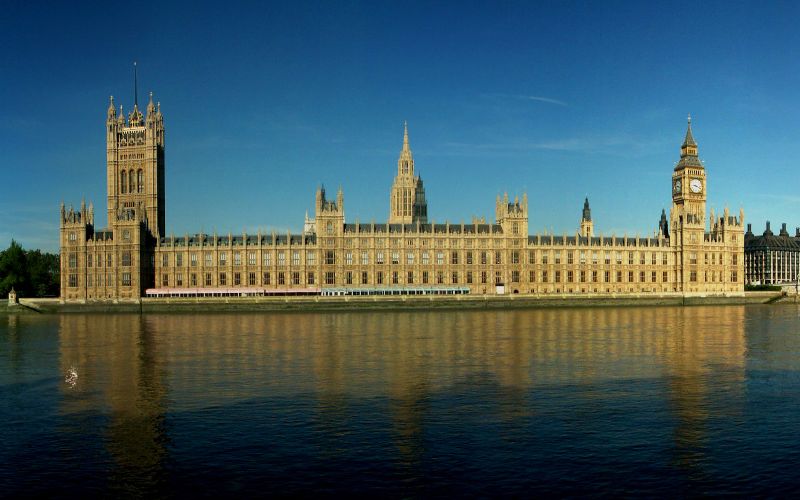
Houses of Parliament, also known as Palace of Westminser, in London

This photo of the Houses of Parliament in London is part of one of the panoramic images found on the PanoramicEarth.com Tour of London. There are over 100 images taken from around London linked to an interactive map.

Plan your visit to London by taking advantage of these London Hotel Specials or Thomson City Breaks. Get the most of London with these London Guide Books

The Houses of Parliament is the seat of debate between the parties in Britain, and the centre of much politicking and protest. A building and symbol of power and government much love, and equally hated by many. Guy Fawkes Night (November 5th) celebrates the failure of a plot to blow up the Houses of Parliament, thereby killing King James 1 and both the House of Commons and the House of Lords in one swoop, in his Gundpowder Plot in 1605.

The Houses of Parliament are also known as the Palace of Westminster. The building sits on the north bank of the Thames in the City of Westminster. The Palace is in fact an amalgamation of several buildings, the oldest surviving part of which dates back to 1097. However, most of the Palace of Westminster was destroyed by fire in 1834, and much of the present building dates from the 18C. The Palace of Westminster was rebuilt in a Gothic style, and one of the most famous features is St. Stephens Tower, which contains the bell Big Ben, which has now become the common, but wrong, name for the tower itself.

The British Parliamentary system can (and does) seem to many a complex affair. There are two ‘Houses’, that of the Commons (an elected body) and that of the Lords (currently filled by hereditary titles and life appointments). Thus within the Houses of Parliament there are two ‘chambers’ where the different bodies meet. The elected Members of Parliament (MP) in the Commons, and Piers in the Lords. Debate, procedure and address is sometimes archaic, prosaic and often at times lengthy.

The Houses of Parliament are well worth a visit. Residents of the UK can make arrangement to visit through their MP both while Parliament is in session and when in recess. Overseas visitors are only able to visit the Houses of Parliament during the summer recess. Apart from the Chambers of Commons and Lords, the Palace of Westminster contains over 1000 rooms, including libraries, conference rooms, and not a few bars.

Originally the Palace of Westminster served as the principal residence for the monarch in London, from the time William the Conqueror (1066) through to Henry VIII when a fire destroyed a part of the building in 1529. The King then moved to York Palace. Westminster Hall, the Jewel Tower, the crypt of St. Stephens Chapel and the cloisters are the only parts of the building dating from this era. The rest was destroyed by fire in 1824. The Chamber of Commons was again destroyed by bombing during WWII.

The Palace of Westminster is a Grade 1 listed building, greatly restricting any further alterations to it’s structure. Combined with Westminster Abbey and St. Margaret’s the area is classified as a World Heritage Site. There is so much that could be said about the building and those with more interest should see the Wikipedia article on the Houses of Parliament and the Palace of Westminser.

Over 200 Destinations with HotelConnect

Two fulll panoramic images taken of the front and back of the Palace of Westminster can be found on the London tour by PanoramicEarth.com. An enlargement of this photo can be found on Flickr.

For more articles on London see the London Index or select one of the labels at the bottom.

Friday, October 27, 2006

Westminster Cathedral - London

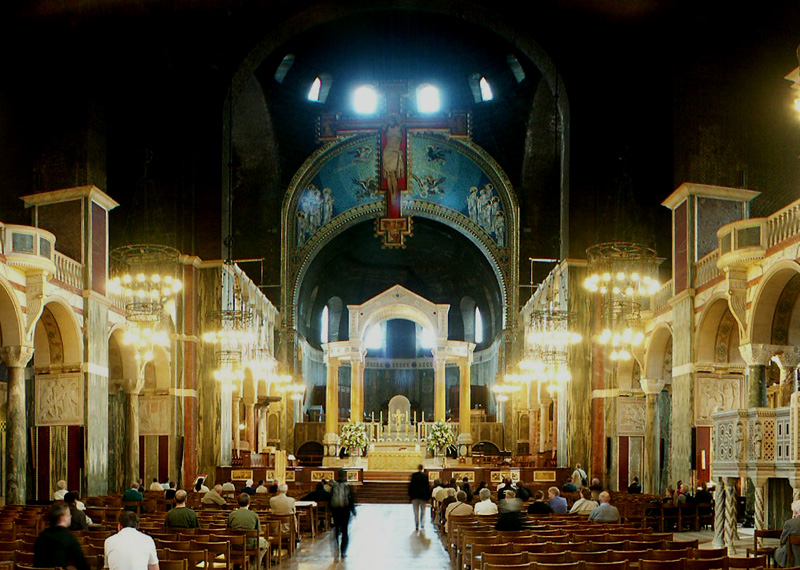
Interior Westminster Cathedral, London, showing the nave and high altar.

This photo from inside Westminster Cathedral in London is part of one of the panoramic images found on the PanoramicEarth.com Tour of London. There are over 100 images taken from around London linked to an interactive map.

Plan your visit to London by taking advantage of these London Hotel Specials or Thomson City Breaks.

Westminster Cathedral is tucked away in a piazza of Victoria Street, about half way between Victoria Station and Parliament Square. Previously the site was occupied by the Tothill Fields Prison (formerly called Middlesex (Westminster) House of Correction), a prison for boys. This was brought in 1884 by Cardinal Manning and on it now stands the current Cethedral. The foundation stone was laid in 1895 and the bulk of the building was completed by 1903.

It is quite an extraordinary building in London, with the tall tower, domes and balconies all built in the Byzantine style of the Easter Roman churches rather than the Gothic styles Europe was familiar with (or the Baroque style of the Brompton Oratory in Knightsbridge). However, the uniqueness of Westminster Cathedral does not stop here. The vast interior is an ongoing project and not yet considered complete.

To date there are over 126 types of marble from 26 countries on 5 continents used to decorate the interior. Almost everywhere you look yet another colour of stone catches the eye, from the large pillars in the nave to fine patterns on St. Patrick’s chapel (where a lot of the stone used is Irish) and St. Andrew’s chapel. The work is going on and in 1995 more marbles were installed within the Nave. The high altar is made of twelve tons of Cornish granite and above it is a canopy of white Carrara inlaid with coloured marbles and resting on eight columns of yellow Verona. And that is just a taster.

Some of the interior is clearly symbolic. The two red pillars inside the entrance of Westminster Cathedral represent the blood of Jesus shed on the cross, while the sea animals in the floor of St. Andrews chapel represent his former life as a fisherman before becoming a follower of Jesus.

From there it is possible to move on to the mosaics that decorate some of the interior. These are by no means complete as only 7 of the 12 chapels have yet been decorated (as of 2006). However, an impressive amount has already been installed, the blue arch over the sanctuary has over 1,000,000 pieces to make up the mosaic, while the mosaic found in the Lady chapel contains some 3 million pieces!

Westminster Cathedral really is a hidden treasure, not as popular as nearby Westminster Abbey or St Pauls Cathedral in the City, but well worth a visit. The advantage of this attraction is that, unlike the others, no one is going to demand money off you before you step inside. You can pay, if you wish, to ascend the tower of Westminster Cathedral and get a glimpse of the skyline of London, where you can see all the way over Westminster and as far out as the arches of the new Wembley stadium in the other direction. Be warned, however, that space at the top is in short supply. You are also able to see over the roof of the cathedral behind with green copper domes protruding from the top. The nearest tube to Westminster Cathedral is Victoria Station.

Over 200 Destinations with HotelConnect

The full panoramic image of the inside of Westminster Cathedral can be found on the London tour by PanoramicEarth.com. An enlargement of this photo can be found on Flickr.

For more articles on London see the London Index or select one of the labels at the bottom.

New Panoramas on Panoramic Earth